

A job can hit its bid and schedule and still deliver less cash than expected. For independent contractors, the problem often starts in the books, where job costs, retainage, and overhead get lumped together until the shortfall becomes impossible to ignore.
Tracking income isn’t the same as tracking profit. One tells you what came in. The other tells you what you actually kept.
Good bookkeeping for independent contractors covers both, and it looks different once job costing, retainage, and quarterly taxes enter the picture. These seven habits are the difference between guessing at year-end and knowing, job by job, where the money went.
What Contractor Bookkeeping Actually Looks Like
| A dedicated business bank account and card, separate from personal spending |
| Income and expenses tracked by job, not just by month |
| Overhead (insurance, office costs, vehicle payments) tracked apart from direct job costs |
| Retainage recorded as money you’re owed, not money that’s gone |
| Quarterly estimated tax payments instead of one dreaded bill in April |
| Monthly reconciliation of bank accounts against job-cost reports |
| A clear signal for when a spreadsheet stops being enough |
The challenge isn’t knowing these matter. It’s doing them consistently once four jobs are running at once.
1. Why Mixing Job Funds With Personal Accounts Hides Your Real Profit
Running job payments through a personal account may work at first, but it gets messy once multiple projects overlap with personal expenses. Tracking which deposit or cost belongs to each job quickly becomes difficult.

A dedicated business account and card keep job income and expenses separate, making job costing easier and financial records cleaner for taxes, loans, and bonding applications.
2. Why Job Costing Beats a Spreadsheet for Knowing What a Job Actually Made
General ledger totals show overall income and expenses, but not whether a specific job made money. Job costing tracks labor, materials, subcontractors, and equipment by project so you can see the true margin on each job.

Bookkeeping for independent contractors without job-level detail can look healthy while individual projects lose money through untracked change orders, material overruns, or missed billable costs.
That visibility matters. Only 32.6% of construction establishments that opened in 1994 were still operating ten years later.1 Job-level numbers help contractors identify profitable work and adjust future bids.
3. How Blending Overhead Into Job Costs Distorts Every Bid
Overhead like insurance, office costs, truck payments, and admin time doesn’t belong to one job, but it still affects profit. When it gets buried in job costs, future bids based on past projects can be inaccurate.
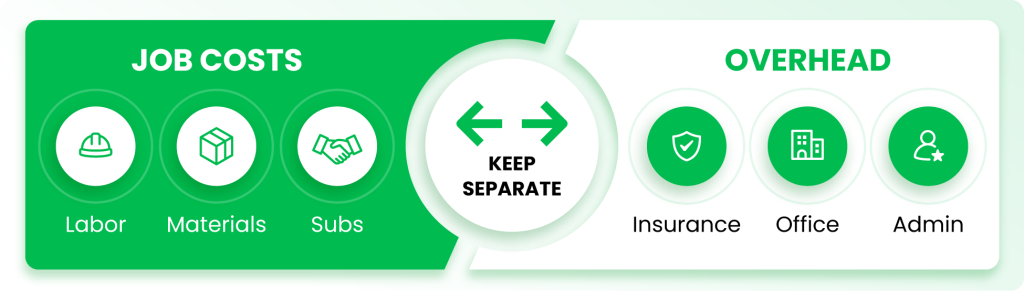
Healthy construction overhead typically runs 8% to 15% of revenue, according to CFMA’s 2024 Construction Financial Benchmarker data.2 The benchmark comes from CFMA’s industry survey of construction financial ratios.3 Tracking overhead separately helps contractors price jobs accurately while covering the cost of running the business.
4. What Untracked Retainage Does to Your Cash Flow
Retainage, typically 5% to 10% withheld from progress payments, is a common blind spot in bookkeeping for independent contractors.4 Instead of treating it as missing cash, track it as a receivable for each job.
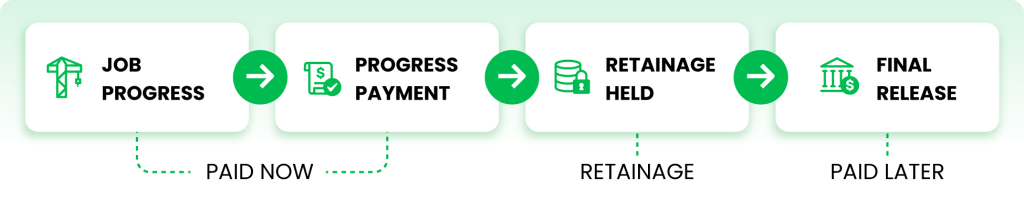
California’s SB 61 capped private-project retention at 5% starting January 1, 2026.5 Tracking retainage separately shows exactly what’s still owed and helps prevent surprises between completed work and cash in the bank.
5. Why Waiting Until April Makes Quarterly Taxes Hurt More
Independent contractors don’t have taxes withheld from each payment. If you expect to owe $1,000 or more, the IRS generally requires quarterly estimated payments.6
Setting aside part of every payment helps avoid a year-end scramble. With self-employment tax at 15.3% before income taxes, planning throughout the year makes quarterly payments easier to manage.


6. What Monthly Reconciliation Catches Before It Becomes a Problem
Monthly reconciliation matches your books to bank and credit card statements, catching errors, missed deposits, and incorrect job costs before they pile up.

With 92% of construction firms reporting difficulty hiring qualified workers, accurate labor and job-cost tracking matters even more.7 Reviewing reconciled accounts and job-cost reports monthly helps keep the books accurate and future bids on track.
7. When Bookkeeping for Independent Contractors Outgrows a Spreadsheet
A spreadsheet works fine for one or two jobs a year. It gets harder to trust once several jobs are running at once, retainage is stacking up across projects, and job-cost reports take a weekend to update instead of an afternoon.

The signal isn’t a specific revenue number. It’s whether the owner still trusts the books enough to bid off them. When job costing, retainage tracking, and monthly reconciliation start slipping from lack of time, that’s the point where dedicated bookkeeping support pays for itself instead of costing extra.
Conclusion
Bookkeeping for independent contractors in construction isn’t complicated in theory. It’s a matter of consistency once several jobs are running at once. Separate accounts, job-level costing, overhead tracked apart from job costs, retainage recorded as a receivable, quarterly tax set-asides, and monthly reconciliation cover the fundamentals. What changes as the business grows is capacity, not the list of what needs doing, but the hours left to do it well.

See a sample job-cost report built for contractors running multiple jobs at once, and get a look at what dedicated bookkeeping support handles once a spreadsheet stops keeping up.
Frequently Asked Questions (FAQs)
What’s the difference between bookkeeping and accounting for independent contractors?
Bookkeeping is the day-to-day recording of income, expenses, and job costs: the raw data. Accounting takes that data and turns it into financial statements, tax strategy, and decisions about pricing or growth. An independent contractor typically needs both, but bookkeeping has to happen first and consistently for the accounting side to mean anything.
Do independent contractors need to pay quarterly taxes?
Yes, if they expect to owe $1,000 or more in tax for the year. The IRS requires estimated payments four times a year, based on Form 1040-ES, rather than one lump sum at filing time.8 Missing a quarter can trigger an underpayment penalty even if the full amount is eventually paid.
What is job costing in construction bookkeeping?
Job costing is the practice of tracking labor, materials, subcontractor costs, and equipment against a specific job rather than the business as a whole. It’s what lets a contractor see whether an individual project made money, instead of only knowing the year-end total across every job combined.
How should a contractor track retainage?
Retainage should be recorded as a receivable, money owed but not yet collected, separate from regular job income, tracked job by job with the percentage withheld and the expected release date.9 Treating it as a receivable rather than lost revenue keeps cash flow projections accurate, especially as more states move to cap retainage at 5%.
What software works best for contractor bookkeeping?
The right software depends on job volume and complexity, but most contractors need something that supports job costing and progress billing beyond basic income and expense tracking. General-purpose accounting software often requires add-ons or workarounds to handle retainage and job-level reporting well.
How often should a contractor reconcile accounts?
Monthly, at minimum. Waiting longer makes errors harder to trace back to their source and lets job-cost reports drift further from what’s actually happening in the bank account. Contractors running several jobs at once often benefit from reconciling weekly during busy stretches.
What records do independent contractors need to keep for taxes?
Income records, expense receipts, mileage logs, and job-cost documentation are the core set, generally kept for at least three years. Construction-specific records (contracts, change orders, and retainage schedules) matter too, since they support both tax filings and any dispute over a job’s final numbers.
How is an independent contractor classified differently from an employee?
The line comes down to control: how much say the hiring business has over how, when, and where the work gets done. The Department of Labor and IRS both apply tests centered on that distinction rather than what a contract calls someone, and misclassifying a worker either way can trigger back taxes and penalties.10
Can AI replace a bookkeeper for a construction business?
AI can automate parts of the transactional work: categorizing expenses, matching bank transactions, flagging anomalies. It doesn’t replace judgment on job costing, tax strategy, or a client’s specific situation. Most contractors get the most value from AI tools handling volume while a person still reviews the books and interprets what they mean.
When should a contractor outsource bookkeeping instead of doing it themselves?
Once job-cost reports take longer to update than the work they’re tracking, or retainage and quarterly taxes start slipping from lack of time, outsourcing usually pays for itself. The tipping point is less about revenue and more about whether the owner still trusts, and has time to maintain, the books they’re bidding off of.
Let FullStaff Handle Your Bookkeeping
Running job costs, retainage, and quarterly taxes across several active projects is a lot to track alongside actually running the jobs. See a sample job-cost report we build monthly for contractors running multiple jobs at once.
Since 2012, FullStaff has matched growing businesses with dedicated virtual accountants and bookkeepers who handle the day-to-day so owners can get back to running the business.
- Job-cost tracking and project reporting
- WIP and retainage tracking
- Certified payroll
Here’s how it works: complete a short kickoff form, meet with our team to go over your books and job structure, then get matched with a dedicated professional who learns your business instead of rotating off it.
👉 Get started with FullStaff — Plans start at $200/month, scaling with the number of active jobs and transaction volume.
References:
- BLS Business Employment Dynamics — Construction establishment survival rates
- James Moore & Co. — 2025 Performance Benchmarks for Construction Companies
- CFMA — 2024 Construction Financial Benchmarker Executive Summary
- Construction Coverage — What Is Retainage in Construction?
- Buchalter — California SB 61 Caps Retention at 5% on Private Construction Projects
- IRS — 1099-MISC, Independent Contractors, and Self-Employed FAQ
- AGC of America / NCCER — 2025 Workforce Survey Results
- IRS — About Form 1040-ES, Estimated Tax for Individuals
- Levelset — California Retainage Rules & FAQs
- U.S. Department of Labor — Employee or Independent Contractor Classification Rulemaking