

Hiring a bookkeeper used to be a simple problem. You posted the role, hired someone dependable, and the monthly close got done. Today, many small firms face longer hiring cycles, higher salaries, and growing backlogs while the role stays unfilled.
That’s why many small businesses are turning to offshore accounting providers. The challenge is knowing which ones are actually worth trusting.
If you’re comparing the top offshore accounting service providers for small firms, this guide explains the five factors that matter most: staffing, credentials, data security, pricing, and what to expect during the first 90 days.
What the Top Offshore Providers Actually Look Like
Before the detail, here is the pattern that holds across every provider worth hiring:
| They assign a dedicated accountant to your books, not a rotating pool that re-learns your chart of accounts every quarter. |
| They hire degree-qualified accountants trained on US GAAP and the platforms you already use, like QuickBooks Online or Xero. |
| They document their security controls and can produce a SOC 2 report or equivalent, not just a reassuring paragraph on a website. |
| They price per dedicated professional, in writing, with no per-transaction surprises. |
| They run onboarding on a schedule: access handover, a close calendar, and a first reconciled month with defined deliverables. |
| They overlap with US business hours and can name the specific person who will answer your questions. |
The challenge is evaluation, not availability.
The Hiring Math Pushing Small Firms Offshore
Finding qualified accounting talent isn’t getting any easier. The U.S. Bureau of Labor Statistics projects employment of accountants and auditors to grow 5% from 2024 to 2034, with about 124,200 openings each year, driven largely by workers retiring or leaving the field.1

For a small firm, that math lands hard. You’re competing for the same talent as CPA firms and mid-market companies that can offer $80K or more, plus benefits. A candidate who can run your monthly close, manage AR aging, and produce lender-ready financial statements often has better offers.
That’s why the top offshore accounting service providers for small firms have become a practical solution—not because offshore talent is a novelty, but because they give businesses access to skilled accountants beyond an increasingly competitive local hiring market. In many countries, accounting remains a well-established profession with a strong pipeline of qualified talent.
Three Offshore Models — and Why the Wrong One Creates Rework
“Offshore accounting services” describes at least three different business models, and the model matters more than the marketing. The global finance and accounting outsourcing market was worth roughly $60 billion in 2023 and is growing at over 9% a year, which means every model now has polished websites and confident sales teams.2
📊 In Deloitte’s survey of more than 500 global executives, skilled talent and agility joined cost reduction as the key drivers for outsourcing.3
| Feature | Freelancer Marketplace | Project-Based Firm | Dedicated Offshore Staffing |
|---|---|---|---|
| Primary Contact | One freelancer | Shared team | One dedicated accountant |
| Knowledge Retention | Low | Medium | High |
| Continuity | Depends on one person | Varies by assignment | Consistent month after month |
| Best For | Small one-off tasks | Cleanup or catch-up projects | Ongoing bookkeeping and accounting |
| Main Risk | No backup if unavailable | Context is lost between team members | Higher commitment but greatest consistency |
Freelancer marketplaces
Hiring an individual freelancer is the cheapest entry point and the most fragile. You get one person, no backup, no review layer, and no recourse if they disappear during tax season. Some freelancers are excellent. The model still concentrates all your continuity risk in a single person you’ve never met.
Project-based outsourcing firms
These firms pool work across a production team. They are a reasonable fit for one-time cleanup or catch-up projects. For ongoing bookkeeping, the pooled model turns your books into a ticket queue: whoever is available handles this month’s reconciliations, and context gets rebuilt on your invoice.
Dedicated offshore staffing
In this model, the provider recruits, employs, and manages a specific accountant who works only on your books, the same way an in-house hire of an offshore accountant would, minus the recruiting and payroll burden. Continuity compounds: the person who reconciled January is the person closing December, and they know why that vendor account always runs a balance.


What Separates the Top Offshore Accounting Service Providers for Small Firms
Once you’ve settled on a model, individual providers still vary widely. Three things predict quality better than anything on a sales call.
Credentials and US GAAP fluency
Ask what the provider’s accountants actually hold: accounting degrees, CPA licenses or local equivalents, and documented training on US GAAP. Then ask how the work is reviewed. A good provider has a review layer above the accountant doing your books and can describe it without hesitation. A weak one changes the subject to price.
📊 The Philippine finance and accounting outsourcing market generated $1.88 billion in 2025 and is projected to reach $4.92 billion by 2033, growing 12.8% annually.4
That growth reflects demand from businesses that have already made this evaluation. It also means providers there compete for accountants, so ask how a provider retains its people. Their turnover becomes your turnover.
Communication cadence and who you actually talk to
Time zone overlap matters less than most owners fear and more than most providers admit. What you want in writing: which hours your accountant overlaps with yours, who answers questions the same day, and whether you talk to your accountant directly or through an account manager buffer.
The Security Questions That Sort Serious Providers From the Rest
Your books contain bank credentials, payroll data, vendor accounts, and customer information. Any provider handling them should be able to explain their controls in specific terms.
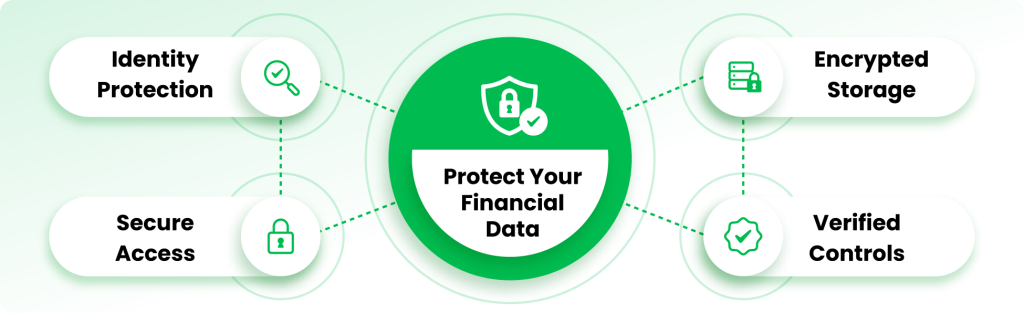
The reference standard is SOC 2, a framework from the AICPA under which an independent auditor examines a service organization’s controls across security, availability, processing integrity, confidentiality, and privacy. A Type I report checks controls at a point in time; a Type II report tests whether they held up over months, which is the stronger signal.5
Accountability is the other half. Outsourcing the work never outsources the responsibility: the IRS is explicit that an employer remains liable for federal tax deposits and filings even when a third party handles them.6 The same logic applies to your books generally. You are trusting, so verify.
Five questions worth asking any provider before signing:
| Can you share a current SOC 2 report or a written summary of your security controls? |
| Who at your company can access my financial data, and how is that access logged? |
| Is multi-factor authentication enforced on every account touching my systems? |
| What happens to access on the day an employee leaves? |
| Where is my data stored, and how is it encrypted? |
A provider that can’t answer security questions in writing has already answered them.
What Offshore Pricing Actually Buys — and Where Hidden Costs Live
Start with the US baseline. The median bookkeeper salary is around $49,000 before payroll taxes, benefits, software, and management time, and the median accountant earns $81,680. A fully loaded in-house hire for a small firm runs well past the sticker salary, assuming you can find one.
Offshore pricing generally follows one of three shapes: a flat monthly rate per dedicated professional, hourly billing, or per-transaction packages. Flat per-professional pricing is the easiest to budget and the hardest to inflate. Hourly and per-transaction models reward the provider when your books get messier, which is a strange incentive to pay for.
| Feature | Flat Monthly | Hourly Billing | Per-Transaction |
|---|---|---|---|
| Best for | Ongoing bookkeeping | Variable of short-term work | High-volume processing |
| Pricing | Fixed monthly fee | Charged by hours worked | Charged per transaction |
| Budget predictability | High | Low | Low |
| Monthly cost | Consistent | Changes each month | Changes with transaction volume |
| Hidden cost risk | Low | Medium | High |
| Scope clarity | Clearly defined upfront | May expand over time | May increase as volume grows |
This is where the top offshore accounting service providers for small firms distinguish themselves: the scope is defined, the pricing is flat and documented, and add-ons like software seats, replacement of a departing accountant, or catch-up work are priced before you sign, not discovered on an invoice.
Onboarding and the First 90 Days
The first 90 days determine whether an offshore accounting partnership succeeds. A reliable provider follows a defined onboarding process, not an improvised one.
A typical timeline looks like this:
| Week 1: system access and a documented close calendar. |
| Month 1: the first fully reconciled close. |
| Month 2: on-time financial statements and a review call. |
| Month 3: a predictable monthly close that runs with minimal oversight. |
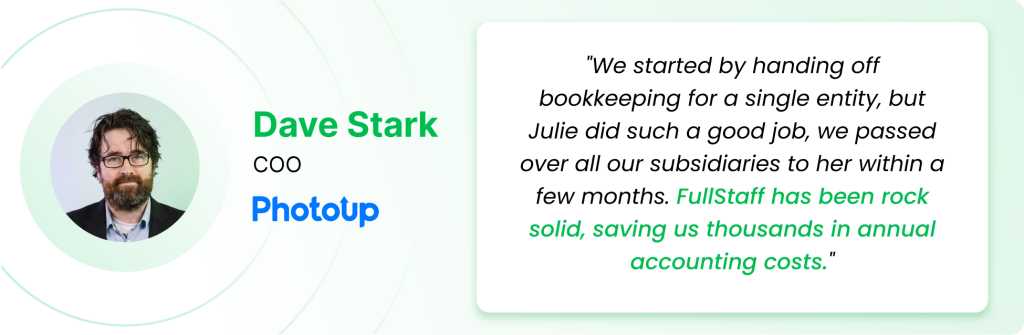
Even messy books can reach that point. PhotoUp, a real estate photo editing company with U.S. and international entities, replaced its legacy accounting firm with a dedicated offshore accountant and moved to consistent, consolidated monthly financial reporting through a structured handover.
If a provider can’t clearly explain what your first 90 days will look like, that’s a sign the process isn’t well defined.
Conclusion
The top offshore accounting service providers for small firms share the same fundamentals: a dedicated staffing model, verifiable credentials, strong security controls, and transparent, flat-rate pricing. Rankings alone will not tell you those things. A focused evaluation will.
Before you decide, ask every provider to walk you through their first 90 days and show you a sample monthly close package. The right partner will have both ready.
Frequently Asked Questions (FAQs)
What is offshore accounting?
Offshore accounting means having your bookkeeping and accounting work performed by professionals based in another country, most commonly the Philippines or India, while your business and its compliance obligations remain in the US. The work itself is the same: transaction categorization, bank and credit card reconciliation, monthly close, and financial statements, done in your own accounting software under US GAAP.
What is the difference between offshore accounting and outsourced bookkeeping?
Outsourced bookkeeping is the broader category: any arrangement where a third party handles your books, whether they sit across town or overseas. Offshore accounting is the subset where that third party’s team is based internationally, which typically lowers cost significantly and widens the available talent pool, while adding evaluation criteria like time zone overlap and data security controls.
How much do offshore accounting services cost for a small business?
Entry-level offshore bookkeeping plans commonly start at a few hundred dollars per month, and a full-time dedicated offshore accountant typically costs a fraction of the fully loaded cost of a comparable US hire, whose median salary alone is around $49,000 for a bookkeeper and $81,680 for an accountant. The pricing model matters as much as the number: flat per-professional pricing is easier to budget than hourly or per-transaction billing.
Is it safe to outsource bookkeeping for small business overseas?
It is safe when the provider can document its controls, and risky when it can’t. Look for a SOC 2 report or a written equivalent covering access controls, multi-factor authentication, encryption, and same-day access revocation when staff leave. Reputable offshore providers operate under the same confidentiality expectations as US firms, and the serious ones will answer security questions in writing before you sign.
Why do companies outsource accounting to the Philippines?
The Philippines combines a large accounting graduate pipeline, high English proficiency, and decades of experience serving US companies through its business process outsourcing industry, so accountants there commonly arrive already familiar with US GAAP concepts and US platforms like QuickBooks Online. The country’s finance and accounting outsourcing sector is growing about 12.8% a year, reflecting sustained demand from US businesses.
Do offshore accountants understand US GAAP and US tax rules?
Accountants at established offshore providers are trained on US GAAP and work daily in US accounting platforms, and many hold accounting degrees or CPA-equivalent credentials. Most offshore engagements cover bookkeeping, reconciliation, and financial reporting, while a US CPA typically remains responsible for tax strategy and filing, which is a division of labor rather than a limitation.
What should a small business outsource first — bookkeeping or tax prep?
Bookkeeping first. Clean, reconciled, current books make every downstream function cheaper and faster, including tax preparation, which becomes largely a handoff when the monthly close is reliable. Outsourcing tax prep on top of messy books just relocates the problem, because whoever files your return still has to reconstruct the year.
What questions should I ask before hiring an offshore accounting provider?
Ask six things: whether you get a dedicated accountant or a rotating pool, what credentials and US GAAP training that accountant holds, who reviews the work, what security controls exist and whether they’re documented in a SOC 2 report or equivalent, exactly what the monthly price includes, and what the first 90 days of onboarding look like. Providers with good answers give them quickly; providers without them talk about price.
Can AI replace offshore accountants?
AI can automate repetitive accounting tasks like transaction categorization, invoice processing, and parts of reconciliation, but it does not replace an experienced accountant for oversight, judgment calls, compliance review, and explaining what the numbers mean for a decision. In practice, strong offshore teams use AI to compress the transactional layer so the human accountant spends more time on review and reporting, not less.
Let FullStaff Handle Your Bookkeeping
If your books are behind and the local hiring market isn’t producing candidates, you don’t need another ranked list — you need a dedicated accountant running your monthly close. Ask us for a sample monthly close package: the bank and credit card reconciliations, P&L, and balance sheet a dedicated accountant delivers every month.
Since 2012, FullStaff has placed dedicated, degree-qualified accounting professionals with US businesses, working to US GAAP standards — a dedicated team member, not a rotating resource.
- Bank and credit card reconciliation
- Monthly close
- P&L statements
Here’s how it works: complete a short kickoff form, meet with our team to define your scope, and get matched with your dedicated accounting professional.
References:
- US Bureau of Labor Statistics — Occupational Outlook Handbook: Accountants and Auditors
- Grand View Research — Finance and Accounting Business Process Outsourcing Market Report
- Deloitte — 2024 Global Outsourcing Survey
- Grand View Research — Philippines Finance and Accounting Business Process Outsourcing Market Outlook
- Secureframe — What is SOC 2? A Beginner’s Guide to Compliance
- IRS — Outsourcing Payroll Duties