

Production numbers look good. The collections report says something different. For many dental practices, the production-collections gap doesn’t become obvious until cash flow starts falling behind expectations and nobody can immediately explain why.
The causes are usually familiar: aging claims, unreconciled EOBs, and overlooked adjustments. Dentrix captures the clinical activity, but turning it into clear financial insight takes additional work.
When dentist bookkeeping stays in-house, that responsibility often falls on the dentist. The result is time spent reviewing reports, reconciling accounts, and tracking collections instead of treating patients. Every hour spent on bookkeeping is an hour that could be generating production, improving patient care, or growing the practice.
What Dental Practice Bookkeeping Involves
| Tracking production vs. collections and reconciling the gap each month |
| EOB reconciliation across multiple insurance carriers (Delta Dental, MetLife, Cigna, Aetna) |
| Payroll processing across clinical and admin staff, often including production-based compensation |
| Monthly overhead categorization and expense review by category |
| Accounts receivable aging and insurance follow-up before claims hit 90 days |
| Monthly P&L reporting tied to practice KPIs — collection rate, hygiene production, overhead percentage |
| Tax support: estimated payments, equipment deductions, year-end close |
The challenge isn’t that any one task is complicated. It’s that most of them happen after the last patient leaves, and none of them belong on a dentist’s plate.
The Production–Collections Gap Most Practices Can’t Explain
Production is what you bill. Collections is what you receive. The space between them is where many dental practices quietly lose revenue.

A healthy general practice collects 95–98% of adjusted production each month, according to NDP Transitions.1 When collections fall below that range, the cause is often aging claims, missed co-pays, untracked adjustments, or write-offs that aren’t regularly reviewed.
Without consistent bookkeeping, the production-collections gap is easy to miss. The practice sees strong production numbers but doesn’t connect them to weaker cash flow until the shortfall has been building for months.
What counts as a write-off vs. an adjustment
A contractual adjustment is money you agreed not to collect — the difference between your standard fee and the PPO-negotiated rate. A write-off is money you expected to collect but didn’t, usually from a denied claim or an unpaid patient balance.
Both reduce collections, but only one is planned. When they get lumped together in the books, it becomes difficult to tell the difference between contractual adjustments and revenue leakage.
Insurance Aging Drains Earned Revenue
Insurance claims don’t expire at 90 days. But the probability of collecting them drops sharply once they get there.
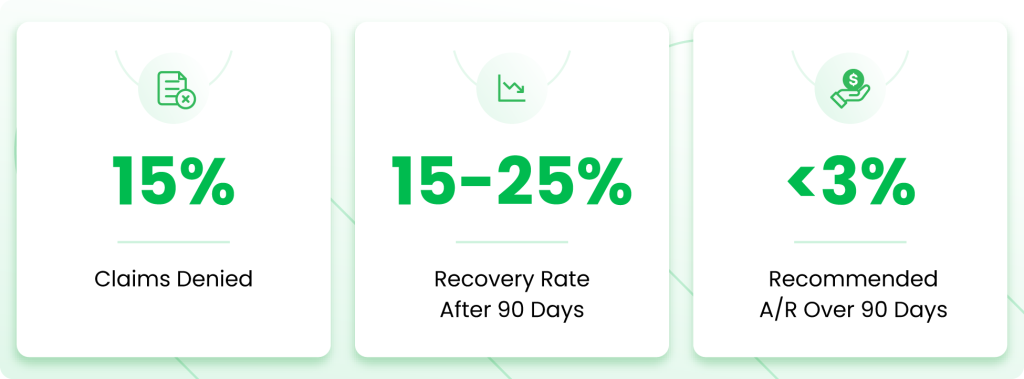
Claims past 90 days have a 15–25% recovery rate. No more than 3% of a practice’s accounts receivable should sit in that bucket — yet practices with inconsistent bookkeeping routinely find 10–15% of their A/R aging beyond the window where follow-up is likely to work.
📊 According to statistics, 15% of dental insurance claims are denied.2 Without timely follow-up and resubmission, those denials can quickly turn into lost revenue.
That’s not a billing department problem. It’s a tracking problem. When EOB reconciliation falls behind, the practice doesn’t know which claims were denied, which were partially paid, and which have already aged out.
The 90-day cliff in insurance A/R
A practice billing $1 million annually and carrying $40,000 in insurance A/R past 90 days is looking at roughly $20,000–$30,000 in permanently unrecoverable revenue — per year, every year it continues. That money was already earned. The work was done. The patient left the chair.
The only reason it doesn’t arrive is that no one is actively managing the claim queue. That task belongs to someone tracking it every week, not someone who fits it in between patient calls.
What consistent EOB reconciliation actually looks like
Consistent EOB reconciliation means matching every insurance payment to the original claim, confirming whether the payment was at the contracted rate, flagging any denials for follow-up before 30 days, and recording the correct adjustment vs. write-off in the books.
For a mid-size dental practice working with four or five carriers, that process takes 8–15 hours a month when done manually. It requires knowing each carrier’s fee schedule, their reason codes, and their resubmission deadlines. It is not a task that happens reliably at 8 p.m. after a full clinical day.


Dental Bookkeeping Takes Time Dentists Can’t Spare
The conversation about dentist bookkeeping almost always focuses on accuracy. The more honest conversation is about cost.
A dentist billing $400–$600 per hour chairside who spends 10 hours a month on bookkeeping, payroll review, and financial reconciliation is making an implicit $4,000–$6,000/month decision — every month — without framing it that way. The time feels free because it happens in the evenings or on weekends. It isn’t.
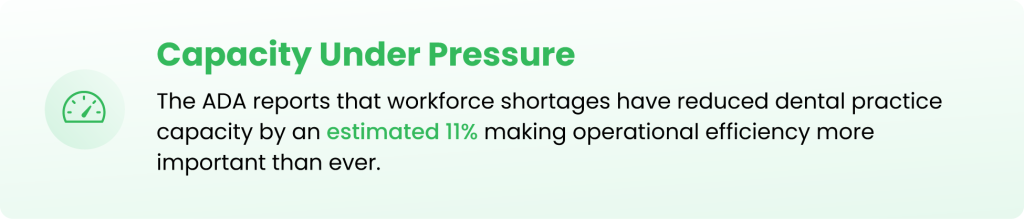
That’s before accounting for what gets missed when someone without bookkeeping expertise maintains the books. Missed deductions and miscategorized expenses can distort financial reporting, making it harder to benchmark overhead and make confident business decisions.
The opportunity cost of dentist-managed bookkeeping
The calculation isn’t complicated. For every clinical hour replaced by administrative work, the practice loses production, strains the schedule, and adds recovery time to the following week. The dentist doing their own books isn’t saving money. They’re spending it at the most expensive rate in the building.
What happens when bookkeeping gets assigned to the wrong person
The front desk staff member handling bookkeeping part-time is the more common scenario — and in many ways the higher-risk one. Misclassified overhead categories, incorrectly recorded insurance adjustments, and payroll coding errors don’t create obvious symptoms. They create slow, invisible margin erosion that shows up months later when the CPA starts asking questions.
The Hidden Complexity of Dental Payroll
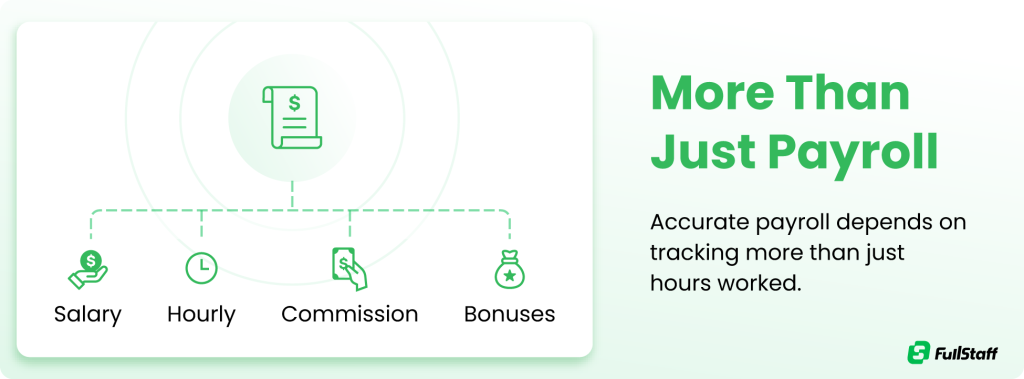
Dental payroll isn’t standard payroll. Associate compensation often depends on production, while hygienists may earn hourly wages plus bonuses. Every payroll run must still reconcile with production reports, time records, and tax requirements.
📊 NetSuite highlights that dental payroll often includes multiple pay structures—including salaries, hourly wages, commissions, and bonuses—requiring careful tracking and reporting.4
Production-based pay creates payroll risks
Production-based compensation requires more than calculating a percentage. Payroll must be reconciled against clinical output, time records, and compensation agreements to ensure associates are paid accurately. Even small discrepancies can create disputes and erode trust.
Worker classification adds another layer of risk. Associate dentists are sometimes treated as independent contractors when they may qualify as employees, exposing the practice to potential tax liabilities, penalties, and audit issues.
The Cost of Skipping a Monthly Close
Most overhead problems start as visibility problems. Rising payroll costs, software subscriptions, supply expenses, and vendor increases can accumulate for months before they become obvious.

📊 Accurate bookkeeping and financial reporting help business owners make data-driven decisions, avoid cash flow issues, and plan for growth.5
A monthly close means every expense category is reconciled, every payment is categorized correctly, and the P&L is accurate by the 10th of the following month. From that document, a practice owner can see whether supplies are running over, whether associate compensation is in range, and whether major expenses still make financial sense.
Without it, dentist bookkeeping becomes reactive—the practice owner looks at a bank balance, not the practice’s financial position.
What monthly financial reporting unlocks for practice owners
A dentist with accurate monthly financials can answer questions that otherwise require guesswork: Can we afford a second hygienist? Does the associate’s productivity justify the compensation structure? Should we finance a new cone beam CT now or wait? These aren’t small decisions, and they’re not answerable with a bank balance alone.
What Dentists Gain by Delegating Bookkeeping
Handing off bookkeeping is not about admitting the work is too hard. It’s about recognizing that the clinical skills that generate the revenue should not be the same skills maintaining the books.
A dedicated bookkeeper handling bookkeeping for dentists takes responsibility for EOB reconciliation, insurance aging follow-up, payroll processing, expense categorization, and monthly close. The practice owner reviews the P&L, signs off on payroll, and makes decisions — rather than doing the underlying work that produces those numbers.
The practical result: more time chairside, cleaner financials at year end, and fewer surprises when the CPA calls.
How to evaluate whether your current books are working
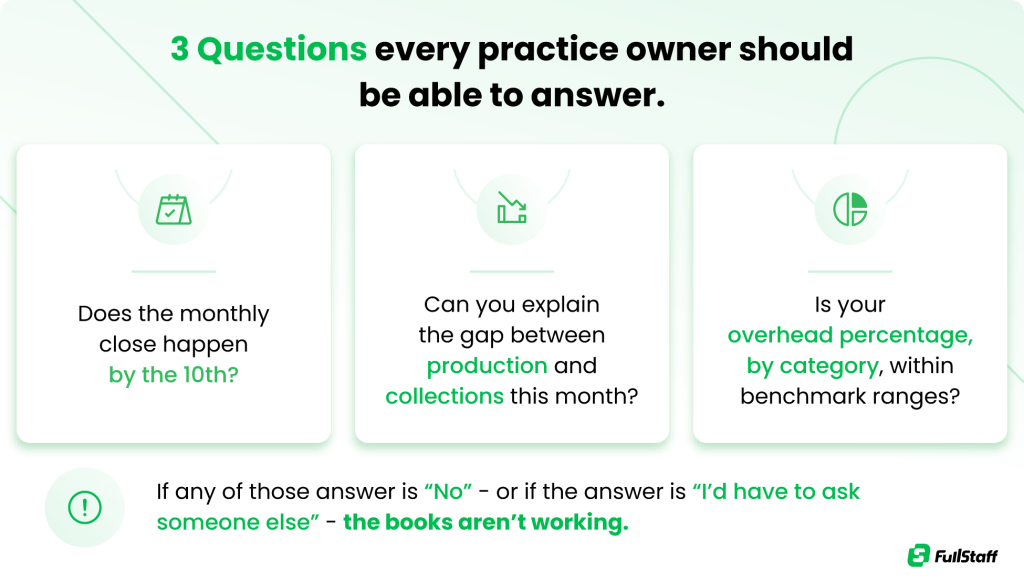
A virtual accountant who specializes in dental practice bookkeeping should be able to provide those numbers without being asked.
Clean books create better visibility, better decisions, and fewer financial surprises. For most dentists, the goal isn’t to spend more time on bookkeeping—it’s to have confidence that it’s being handled correctly.
Frequently Asked Questions (FAQs)
What does dentist bookkeeping include?
Dentist bookkeeping includes tracking collections, reconciling insurance payments, managing accounts receivable, processing payroll, monitoring overhead, and preparing monthly financial reports. It also helps document tax-deductible expenses throughout the year, making tax preparation easier and more accurate.
What’s the difference between production and collections in a dental practice?
Production is the total value of services provided before adjustments. Collections is the amount actually received after insurance adjustments, write-downs, and patient payments. A gap between the two can indicate issues with insurance reconciliation, unpaid claims, or patient collections.
What is an EOB and why does reconciling it matter for bookkeeping?
EOB reconciliation is the process of matching insurance payments to submitted claims, verifying contracted reimbursement rates, recording adjustments correctly, and identifying denied or underpaid claims. Consistent reconciliation helps practices prevent revenue loss and keep accounts receivable accurate.
What’s a healthy collection rate for a dental practice?
A healthy dental practice typically collects 98% or more of adjusted net production. Collection rates below 95% may indicate issues with excessive write-offs, overdue accounts receivable, or ineffective patient payment collection processes.
What happens to insurance claims that age past 90 days?
Ideally, no more than 3% of total accounts receivable should be over 90 days old. Higher levels often indicate delayed claim follow-up, unresolved denials, or inconsistent insurance reconciliation, all of which can lead to lost revenue.
What financial reports should a dentist review every month?
Every dental practice should review four key reports each month: a production vs. collections report, an accounts receivable aging report, a payroll reconciliation report, and a profit and loss (P&L) statement. Together, these reports help track collections, monitor outstanding balances, verify payroll accuracy, and control overhead.
What’s the difference between a write-off and an adjustment in dental bookkeeping?
An adjustment is a planned reduction, such as a PPO contractual discount that the practice agrees to accept. A write-off is revenue that was expected but never collected due to denied claims, unpaid balances, or billing issues. Tracking them separately helps practices distinguish between intentional discounts and actual revenue loss.
How much does outsourced dental bookkeeping cost?
The cost of outsourced dental bookkeeping depends on the size of the practice, transaction volume, and services included. While pricing varies, outsourcing is often more affordable than hiring an in-house bookkeeper and can improve efficiency through better payroll management, financial reporting, and insurance reconciliation.
Can AI replace bookkeepers in a dental practice?
No. AI can automate tasks such as transaction categorization and data entry, but it cannot fully replace a dental bookkeeper. Dental bookkeeping still requires human oversight for insurance reconciliation, payroll verification, financial reporting, and decisions that depend on industry knowledge and judgment.
Let FullStaff Handle Your Bookkeeping
Your practice runs on production. The books should keep up with it — not fall behind while the dentist reconciles EOBs after hours.
Since 2012, FullStaff has placed dedicated virtual accountants with dental practices across the U.S., handling the finance function so dentists can stay chairside.
- EOB reconciliation across all major dental insurance carriers
- Production vs. collections reporting with gap analysis each month
- Payroll processing for associates, hygienists, and admin staff — including production-based compensation
- Monthly overhead categorization and P&L close by the 10th
- Insurance A/R aging follow-up and claim tracking before the 90-day window
Here’s how it works: Fill out the kickoff form, meet with our team to review your practice setup, and we match you with a dedicated dental bookkeeping professional — someone who knows dental, not just accounting.
👉 See a sample EOB reconciliation and monthly P&L — Plans start at a flat monthly rate, scaling with your practice size and transaction volume.
References:
- Production & Collections: Two Key Indicators of a Dental Practice’s Financial Health
- 24 Dental Practice Lost Revenue Statistics
- The Biggest Challenges Dentists Face
- Dental Practice Payroll: A Comprehensive Guide
- Exploring the impact of bookkeeping and financial literacy on the performance of SMBs